

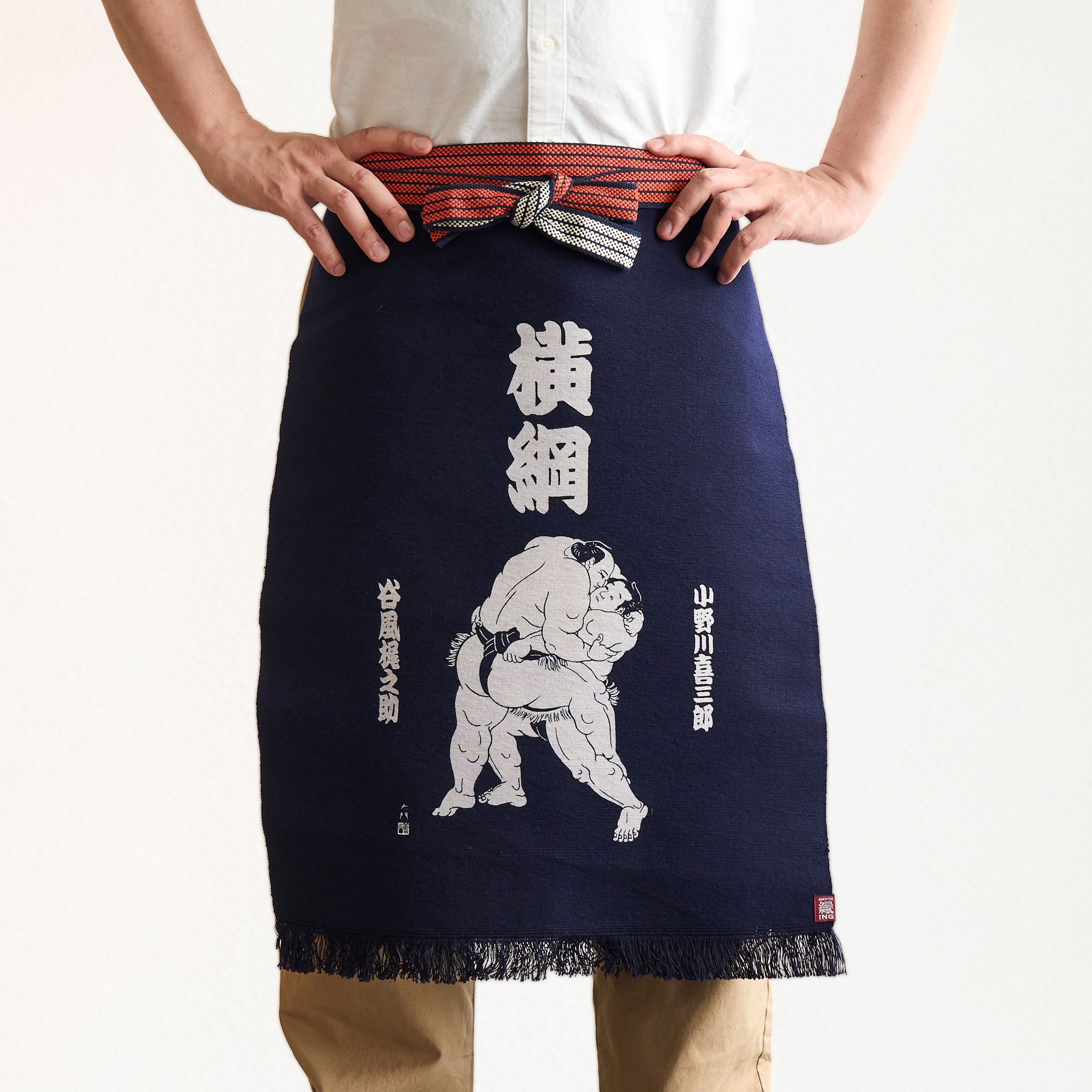
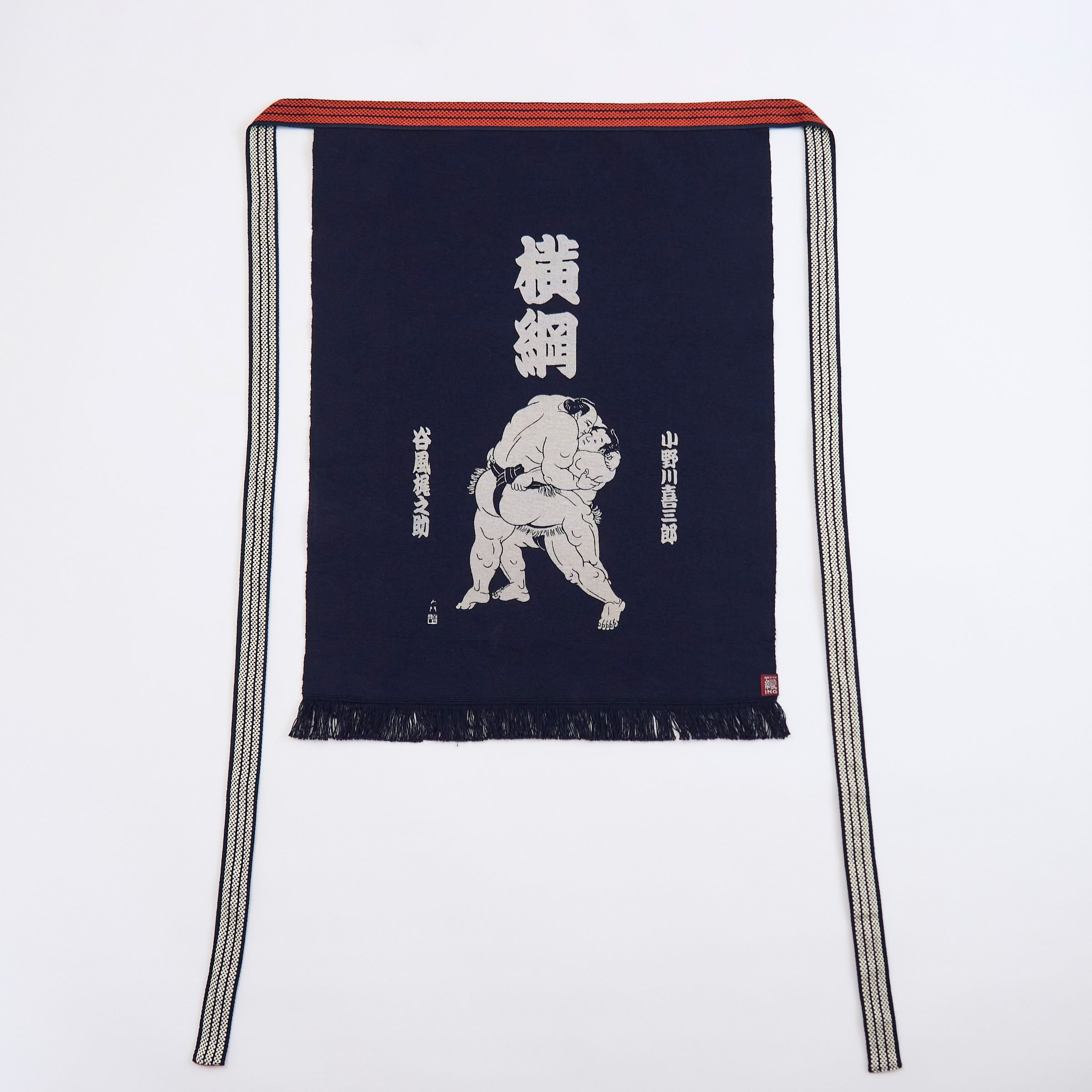


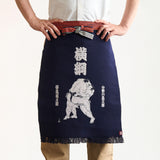
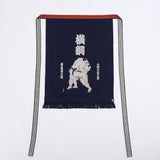
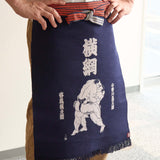
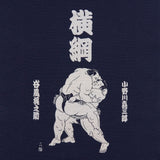
No. 1 Discharge print Sumo Maekake "Yokozuna"
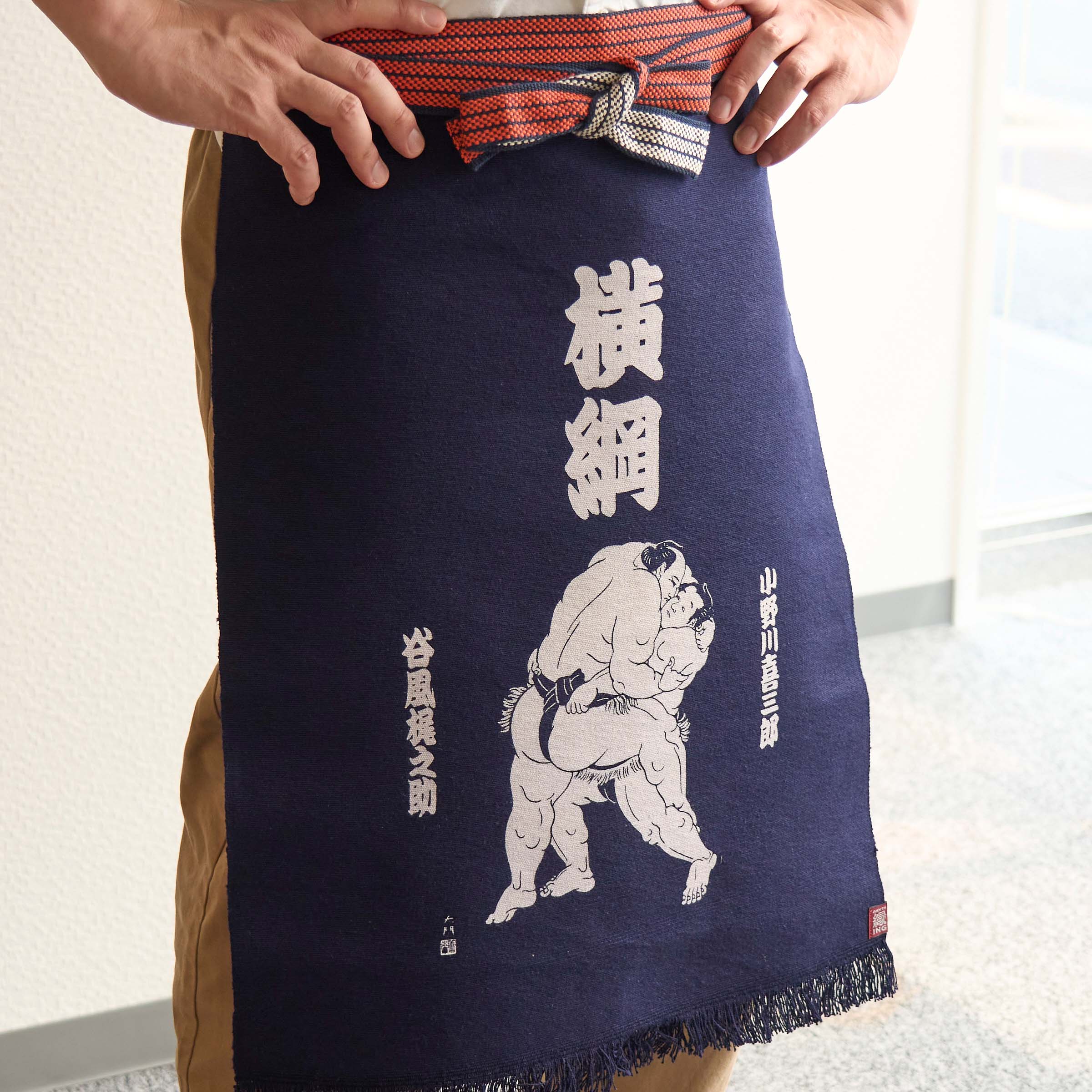
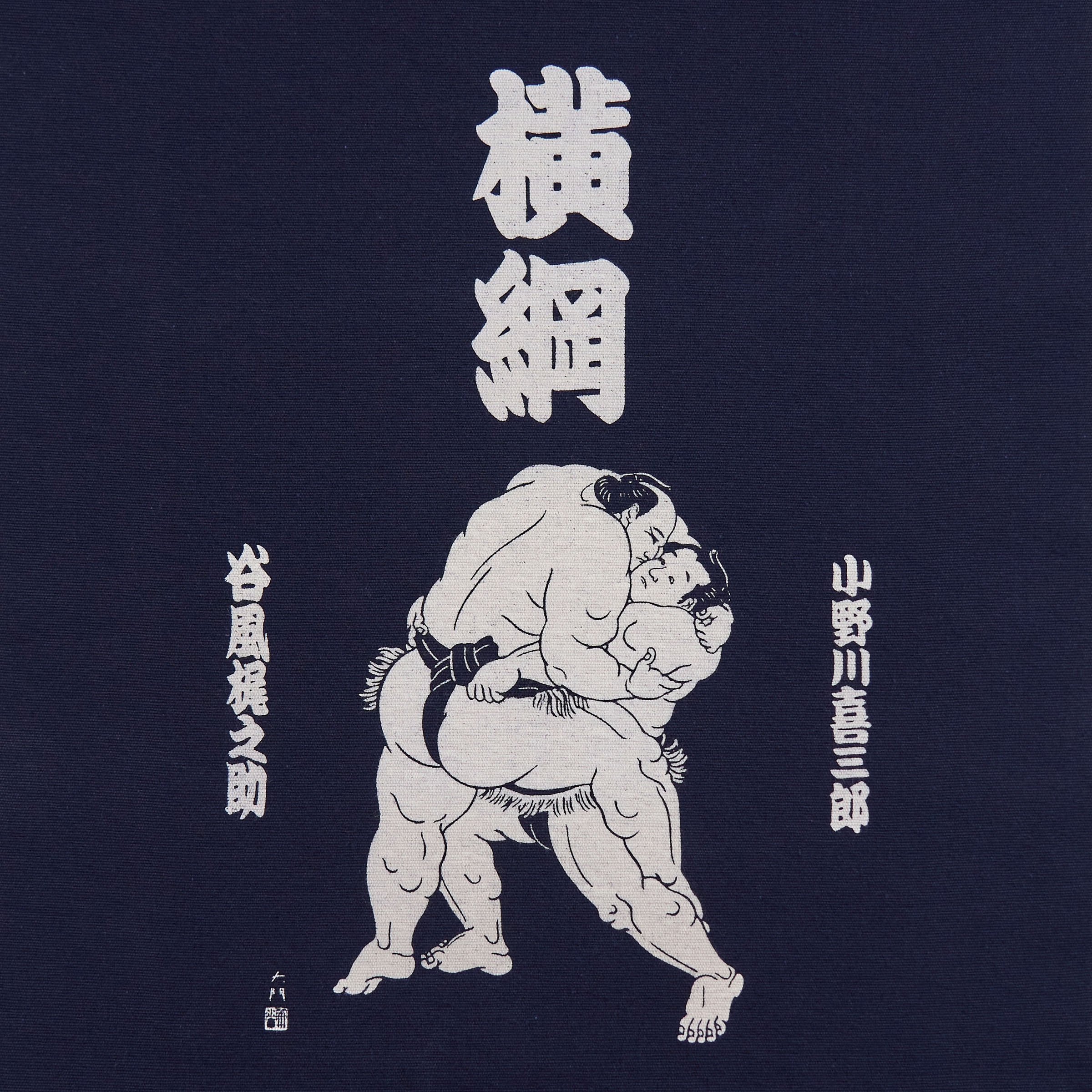
The ukiyo-e print of a (grand champion) by Kinoshita Daimon, an ukiyo-e artist of sumo nishiki-e (color prints), has been dyed onto thick, high-quality No. 1 fabric.
It depicts the matches between the great yokozuna Tanikaze Kajinosuke of the Edo period and the fifth yokozuna Onogawa Kisaburo.

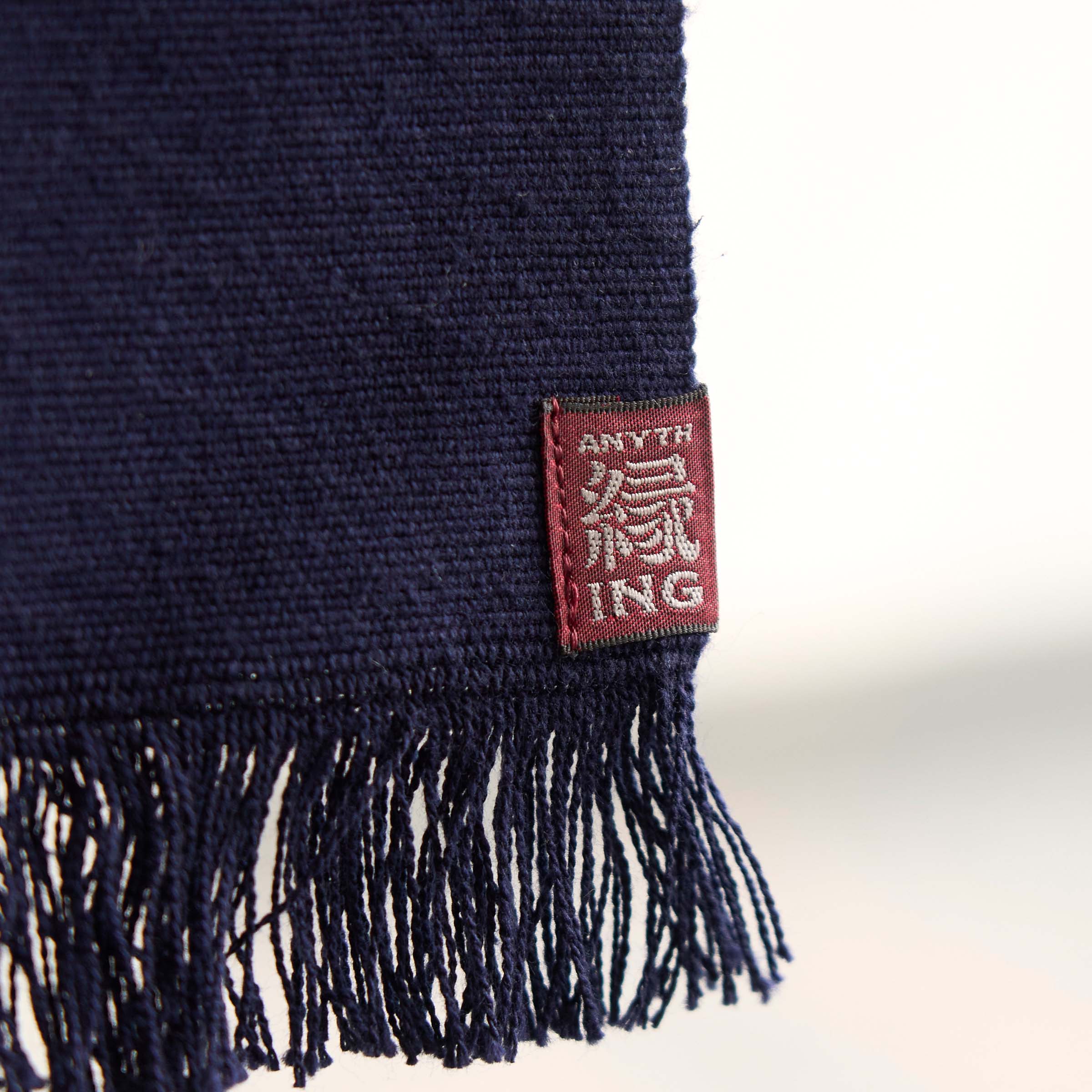
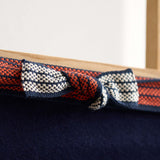
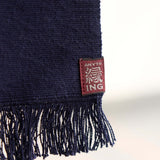
We carefully select thick cotton yarns and weave them slowly on shuttle looms, resulting in a fabric that is substantial yet soft and airy. This special fabric preserves the history of the apron—a texture that cannot be replicated on modern looms.
*All of our apron fabrics are woven on Toyota, Suzuki, and Enshu-style shuttle looms that were manufactured 100 years ago.
This MAEKAKE is crafted using a technique called “Discharge print,” in which the fabric is dyed and then the color is removed from the patterned areas to reveal the fabric's natural color.
Unlike printed designs, the patterns do not fade over time. You can enjoy an authentic MAEKAKE with a traditional, timeless charm.
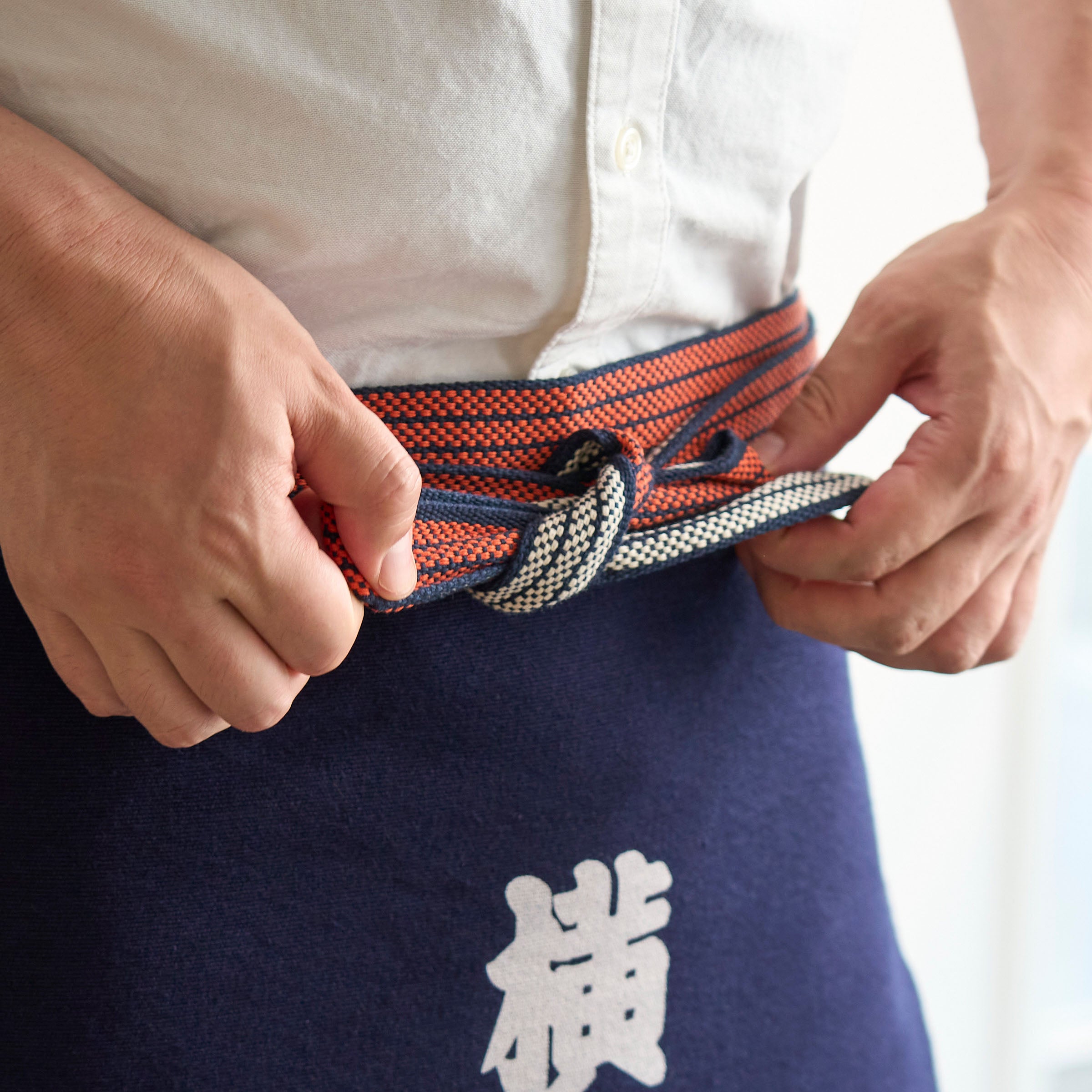
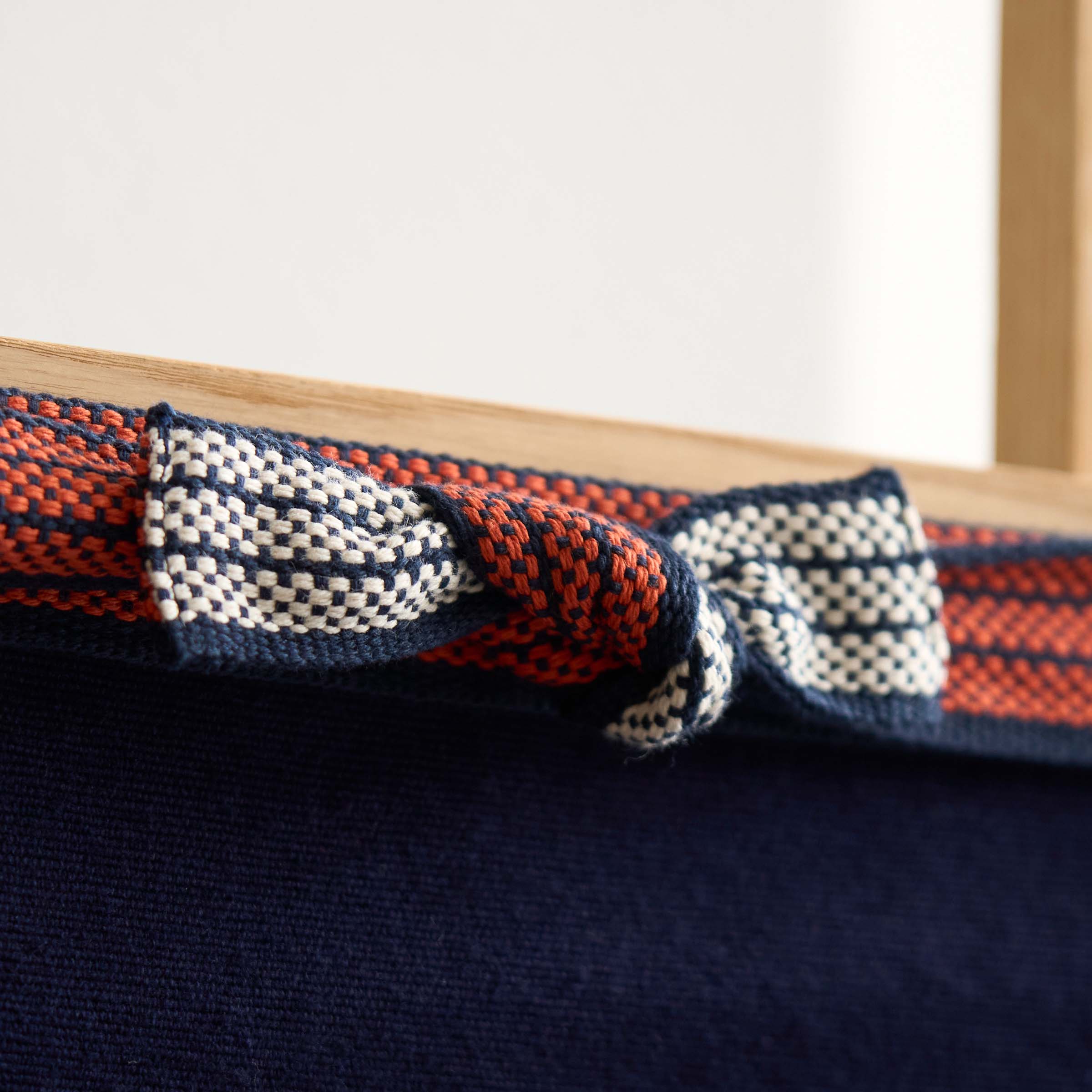
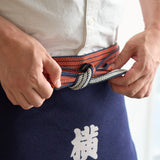
Tightening the waist tie provides support for your lower back, making it ideal for daily chores and outdoor activities. The fabric softens and molds to your body the more you use it.
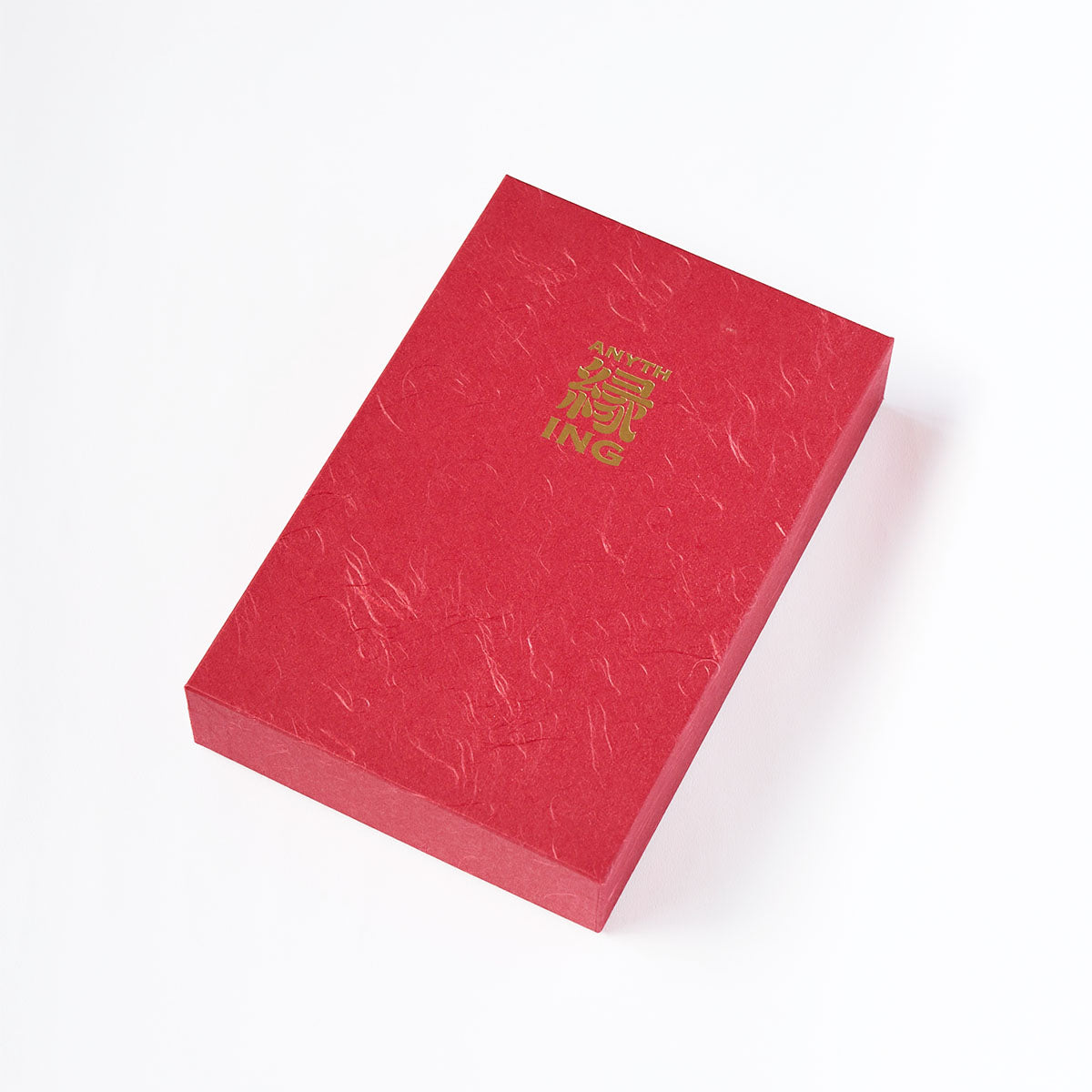
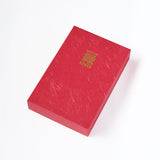
It comes packaged in an original Japanese paper box, making it an excellent choice for a gift.
Specifications
Material: 100% Cotton
Size: 67 cm x 47 cm (including fringe)
Waist strap: 260cm (fits up to 95cm waist size)
Packaging: Original box
Care Instructions
- Do not use bleach or fabric softener.
- Do not tumble dry.
- Do not wash with hot water.
- Wash separately from white items as dye may transfer to other fabrics.
- Due to the nature of the fabric, it may shrink slightly after washing.
Professor Kinoshita Daimon's profile
http://www.daimon-e.sakura.ne.jp/
Born in Teshikaga Town, Hokkaido in 1946.
He spent his childhood surrounded by forests and lakes such as Lake Mashu, Lake Kussharo, and Mount Io.
In the same year that Yokozuna Taiho, a senior at Teshikaga High School, won his 16th championship, he graduated from high school and moved to Tokyo, where he became an independent illustrator under the pen name "Mon Ami" at the age of 20. He worked as a pioneer among creators of fancy goods, focusing on the creation of character goods.
In 1980, he received a revelation while visiting the woodblock print workshop of Rong Hosai in Beijing, and decided to become an ukiyo-e artist, a tradition that had been discontinued for 80 years since the Meiji era. He taught himself the style of ukiyo-e (nishiki-e) from the works of his predecessors from the Edo period, and trained to become an artist who would inherit traditional ukiyo-e, following in the footsteps of the Katsukawa school, including Katsukawa Shunsho and Shun'ei.
When the Ryogoku Kokugikan Sumo Hall was completed in 1985, the Japan Sumo Association approved the restoration of sumo nishiki-e prints using the exact same techniques as in the Edo period, with the artist (Kinoshita Daimon) and the carvers and printers who were designated as Important Folk Cultural Properties by the Agency for Cultural Affairs working together with the publisher, the Kyoto Print Institute.
During the Kokugikan tournaments, several dozen woodblock prints are sold at a special shop next to the entrance. Nishikie prints have been donated by the association to many foreign dignitaries, including Prince Charles and Princess Diana as souvenirs of their viewing of the tournaments, then-Secretary of State Shultz for the American tournament, and then-Mayor Chirac for the Paris tournament.

Free shipping for orders over 11,000 yen